
The Tangem crypto wallet is an NFC card that holds your keys on a certified secure element, backed up by two or three cards instead of a written phrase. It has no screen, so every transaction is verified on your phone, and its firmware cannot be updated, so nothing found in it can be patched.
Listen to this article, about 14 minutes. A synthetic voice reads the article and announces each section title as it begins; tables are read row by row and the questions at the end are left out.
Recorded 3 October 2026 from the article as published that day. Press a chapter to jump there; the highlighted line is what is playing. A play button sits beside every section heading, and once you scroll past this player a bar at the bottom of the screen keeps the controls in reach. Tap or click any sentence to hear the reading start from there.
Everything below was checked on 18 September 2026 against Tangem’s own documentation, the certifying body’s public record, and the researchers who published on the card. The pages ranking for this search are affiliate reviews. They all quote the certification number. As far as we can tell, none of them went and looked it up.
What is the Tangem crypto wallet, and what are you buying?
A Tangem wallet is a plastic card the size of a bank card with an NFC chip inside. No battery, no cable, no display. You tap it against your phone and the app talks to it. The private key is generated by a hardware random number generator inside the chip and never leaves it, which is what makes this a real hardware wallet and not a keychain ornament. That chip is the line between a Tangem and a Ballet card, which has no electronics at all and carries a key the factory printed, as our page on who made both halves of a Ballet crypto wallet key sets out.
Cards are sold in sets. Tangem’s own pricing page, checked today, lists a two card pack at $59.90, a three card pack at $69.90 and the Tangem Ring with two cards at $160.00. During setup the key is cloned onto every card in the set, so any one of them opens the wallet. The convenience is genuine: a card in your wallet gets used, while a cold storage device in a drawer gets forgotten about.
Does the EAL6+ certification hold up when you look it up?
Tangem says its cards use a Samsung S3D350A secure element certified to EAL6+ under the Common Criteria. Every affiliate review repeats it. So here is the check, because a certification claim nobody verifies is just a number in a marketing deck.
The certificate is real and it is current. The entry is ANSSI-CC-2024/15-R01, issued by France’s national cybersecurity agency ANSSI, one of the certification authorities under the Common Criteria arrangement. It was certified on 12 February 2025 and runs to 12 February 2030. The evaluation was carried out by CEA-LETI. The level is EAL6+ augmented with ASE_TSS.2, against protection profile BSI-CC-PP-0084-2014.
Three things the ranking pages leave out, all visible in the certificate record:
- The certificate is issued to Samsung Electronics, not to Tangem. It certifies the silicon. It says nothing about the wallet firmware running on top.
- It covers a family of chips: S3D350A, S3D300A, S3D264A, S3D232A, S3D200A, S3K350A and S3K300A. Tangem quotes the S3D350A. The chip researchers actually attacked was the S3D232A, which sits under the same certificate.
- EAL6+ describes the rigour of the evaluation, not a promise the part is unbreakable, and the profile it was tested against is a general purpose security IC profile, not a hardware wallet one.
So the claim survives the check. What it does not survive is the implication that a certified chip means a certified wallet. Different statements, and the gap between them turned out to matter in July.
The audits are real too, and narrower than the summaries suggest. Tangem’s audit page lists three: Kudelski Security on the smartcard code, Riscure on the hardware and firmware in December 2023, and Cure53 on the mobile app in March 2026. Full reports are published rather than summarised, which is more than most of this industry manages. The most recent one looked at the phone app, not the card.
What did Ledger’s researchers do to a Tangem card?
On 9 July 2026, Ledger Donjon published an attack that resets a Tangem card’s access code by firing a laser at the chip to induce a fault, bypassing the authorisation check in the card’s SetPin instruction handler. Once the code is reset, the attacker controls the wallet and can sign transactions. The vulnerability was disclosed to Tangem on 10 February 2026.
The researchers’ own caveats are unusually candid. The attack needs physical possession of the card, roughly $250,000 of laser fault injection and side channel equipment, and expertise in sample preparation and hardware attacks. It is invasive, so it leaves visible damage, and each reproduction takes about two hours. Their stated conclusion is that the real risk is a lost or stolen card.
What is not routine is the fix. There is not one. Tangem’s help centre states that the firmware is written to the chip once and cannot be updated again. That is normally presented as a security feature, and the argument for it is real: a card that cannot accept an update cannot accept a malicious one. The cost is now documented. Ledger Donjon reports the flaw affects all Tangem cards in circulation, whether or not access code recovery is enabled.
Tangem’s response, reported by The Block, was that the risk to everyday users is virtually non existent given the equipment and access required, and that Ledger Donjon sits inside a competitor. Both points are fair. Neither of them is a patch. The practical consequence is narrow and specific: a card that leaves your possession should be treated as compromised rather than merely misplaced.
Why does the missing screen matter more than the chip?
The chip protects your key from being copied. The screen protects you from signing the wrong thing. Two different jobs, and only one of them is about cryptography.
A Trezor shows the destination address and the amount on its own display, and nothing moves until you confirm on the device itself. That is the defence against address swapping malware, which quietly replaces the address you pasted with the attacker’s. We reached the same conclusion working out what the Ledger Stax screen actually buys. Whether a screen earns its place in your own setup is one of the questions in choosing a crypto wallet by what you are protecting against.
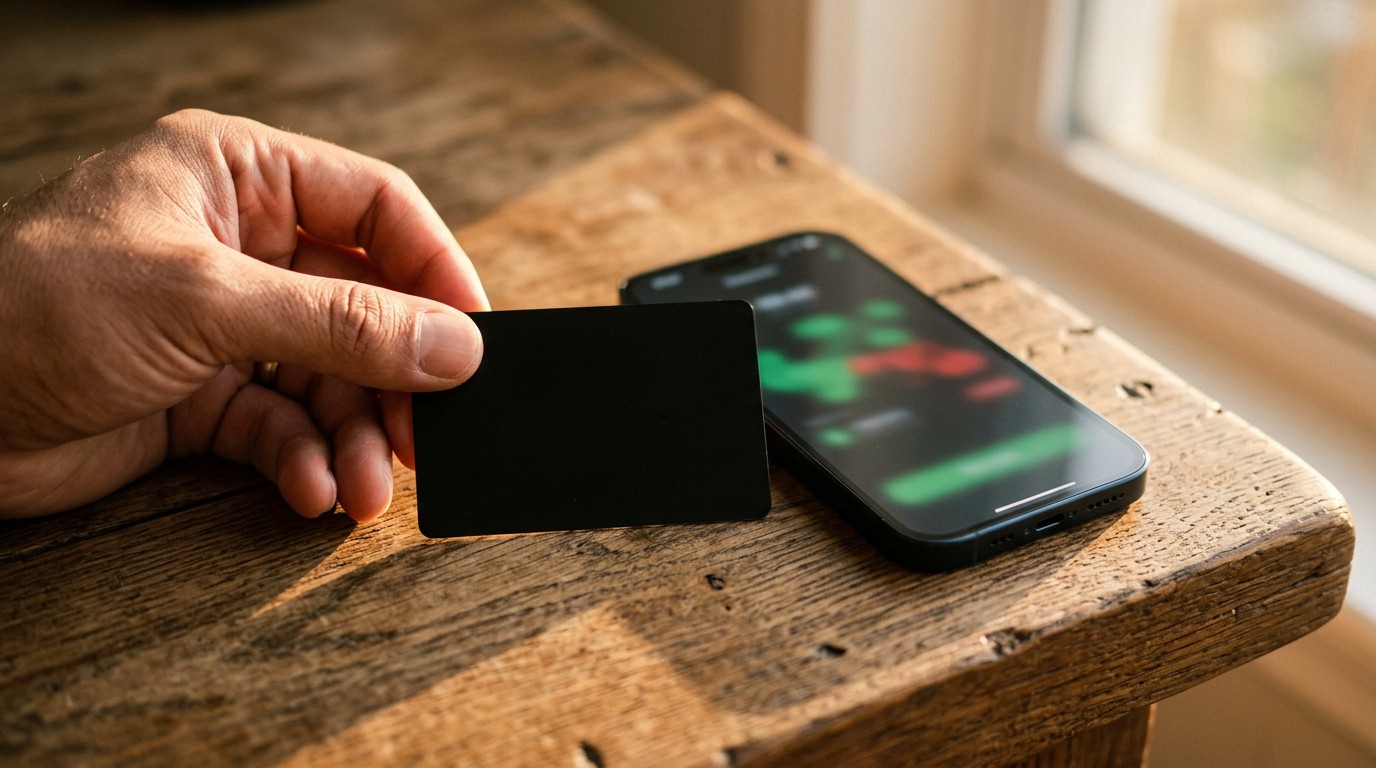
A Tangem card cannot do this. It signs what it is handed. If your phone is compromised, the app can display one address while the card authorises a transfer to another, and the card has no way to know. That is the structural problem we described in the CoolWallet review, except CoolWallet’s Pro at least has a small display and Tangem has none at all. The metal card sold by Arculus makes the identical bargain, and we traced what the Arculus card does and does not show you before it signs through the vendor’s own paper.
To its credit, Tangem does not pretend otherwise. Its post on blind signing argues that adding a trusted display to the card would itself pose a risk to reliability and security, and says plainly that while the app can function on an infected device, it does not recommend using it on one. That is an honest trade stated out loud, which is more than the affiliate reviews bother to do on Tangem’s behalf.
What actually breaks the multiple card backup?
The two or three card set replaces the written recovery phrase, and the sales copy treats that as pure gain. It is not. It is a different set of failure modes. Every row below comes from Tangem’s own documentation.
| What happens | What Tangem’s documentation says | Source |
|---|---|---|
| You lose one card of the set | The rest still open the wallet. You cannot buy another card and add it: cloning the key to a new device is possible only once, at setup. | Loss and recovery |
| A lost card is found by someone else | It cannot be blocked. After backup every card shares one key and is equal, so there is no way to identify which was lost. | Loss and recovery |
| Someone tries to guess your access code | After the sixth wrong attempt the delay between attempts grows by one second each time, to a maximum of 45 seconds. | Loss and recovery |
| You lose every card, with no seed phrase | The funds are gone. Only the device grants access, and nobody, Tangem included, can restore it. | Loss and recovery |
| You lose every card, with a seed phrase | You can restore the wallet to another device using the phrase, as with any other wallet. | Loss and recovery |
| You forget the access code | Resettable in the app, but only by confirming with another card from the set. With no second card you cannot reset it yourself. | Help centre |
| Tangem stops existing | The app is open source and Tangem argues a replacement app could be built for the card. Nobody has had to test that claim yet. | Wallet reliability |
| You change your mind about the seed phrase | Tangem documents that once a seed phrase is generated and used you cannot revert to extra cards as the failsafe. Switching means a factory reset, and funds must be moved out first or they are lost permanently. | Seed phrase FAQ |
Read the first two rows together, because they interact in a way the product page does not advertise. A lost card cannot be revoked, and you cannot replace it. A set of three that loses one card is permanently a set of two, still holding a key somebody else may be holding as well.
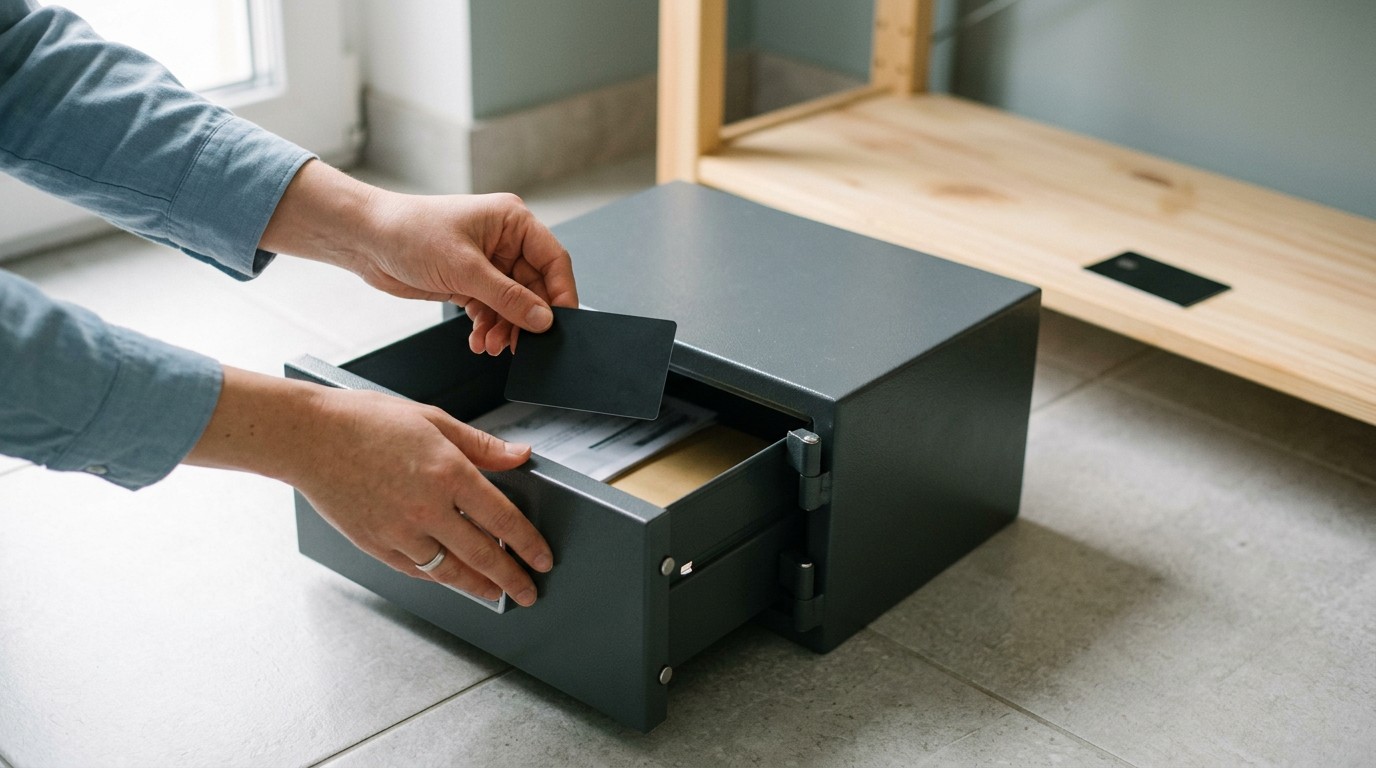
None of this makes the seedless model wrong. It removes the single worst failure in self custody, which is a recovery phrase photographed, typed into a phishing site, or lost in a house move. It is the same bargain Zengo’s seedless wallet makes by different means. It replaces one list of ways to lose everything with another. The printed paper wallet made a version of the same trade a decade earlier and failed in its own way, through the change address that empties the sheet on the first partial spend.
What do Tangem owners actually report?
Testimony is not evidence and nothing below is a security finding. It is what customers wrote in public. We read roughly 40 reviews on Trustpilot, where Tangem holds a TrustScore of 4.0 from 1,022 reviews as of 18 September 2026, distributed oddly: 69 per cent at five stars, 21 per cent at one star, very little in between. In the one star reviews the complaints are almost never about keys or theft. They cluster on hardware and support.
- KM Lynn, around 11 September 2026: one card of three stopped scanning while the other two worked on the same phone, followed by a warranty exchange in which support kept blaming the phone and the phone case.
- Aziz, on 21 and 28 July 2026: a card defective out of the box that prevented setup, then four weeks of tickets in which new agents reopened the same questions, with no refund at the time of writing.
- Chris, on 3 July 2026: a reset attempt demanded an access code they had never set, having used biometrics throughout setup, and support and Discord gave conflicting instructions.
- Cam, on 17 August 2026: a three card set abandoned after purchase and payment features failed, with a small balance stranded in the app.
Against that, most accounts describe a setup that took minutes and worked, and the reviews cutting against the pattern comfortably outnumber the ones supporting it. Two caveats: all four accounts come from one platform, because nothing in the vendor’s public code repositories corroborated them, and a review site selects for people with a grievance.
Where the accounts agree with the official guidance: the multi card design does what it claims when one card fails, and every reviewer above with a dead card still had a working wallet. Where they do not: the documentation treats a dead card as a spare you stop using and never mentions that you cannot replace it. Two reviewers hit that gap.
How does Tangem compare with a wallet that has a screen?
| Tangem card | Trezor Safe family | Ledger Stax | |
|---|---|---|---|
| On device transaction display | None | Yes | Yes, 3.7 inch E Ink |
| Firmware updates | Not possible after manufacture | Yes | Yes |
| Default recovery | Two or three cloned cards | Written recovery phrase | Written recovery phrase |
| Power | None needed, NFC only | USB | Battery, USB C, Qi |
| Price checked 18 Sep 2026 | $59.90 for two cards | Varies by model | $399 |
| Known unpatchable flaw | Yes, laser fault injection, July 2026 | None currently published | None currently published |
There is no verdict in that table and this site does not give one. It is there so the trade is visible: you are exchanging an independent display and a patching route for a device that fits in a wallet, needs no power and survives being sat on. Two things follow from the documentation rather than anyone’s opinion. A card that goes missing should be treated as one an attacker may eventually open, and the phone is the weak point in daily use, not the card.
Never type your recovery phrase into a website, an app that is not your wallet, or a support chat. No legitimate wallet company asks for it. If a page asks you to enter a phrase to verify, restore or claim anything, it is a theft in progress.
Frequently asked questions
Is the Tangem crypto wallet a real hardware wallet?
Yes, in the sense that matters: the private key is generated inside the chip’s hardware random number generator and never leaves the card, so malware on your phone cannot read it. It differs from a Trezor or a Ledger in having no screen of its own, which means it cannot show you what you are signing.
Can Tangem fix the laser attack Ledger Donjon published?
No. Tangem’s help centre states the firmware is written to the chip once and cannot be updated, and Ledger Donjon’s disclosure of 9 July 2026 states the flaw affects all cards in circulation and cannot be patched. The attack requires physical possession of the card and roughly $250,000 of laboratory equipment.
What happens if I lose one of my Tangem cards?
The remaining cards still open the wallet. Tangem documents that you cannot buy a replacement and add it, because the key can be cloned to new devices only once during setup, and that a lost card cannot be blocked because every card in the set is identical.
Does Tangem give me a seed phrase?
Only if you choose one at setup. The default is seedless, with the extra cards acting as the backup. Tangem documents that the choice is not freely reversible afterwards, and that a factory reset requires moving all funds out first or they are lost permanently.
Is the EAL6+ certification claim accurate?
The certificate exists and is current. It is ANSSI-CC-2024/15-R01, certified 12 February 2025 and valid to 12 February 2030, evaluated by CEA-LETI. It is issued to Samsung Electronics for a family of smartcard microcontrollers, so it certifies the chip and not Tangem’s wallet software.
Why does a wallet with no screen worry security people?
Because verification moves to your phone. If the phone is compromised, the app can show one destination while the card signs a transfer to another, and the card cannot tell the difference. Tangem acknowledges this and argues that adding a display to the card would create risks of its own.
This article is educational and is not financial advice. Nothing here is a recommendation to buy, sell or hold anything. You are responsible for your own security decisions.
Leave a Reply